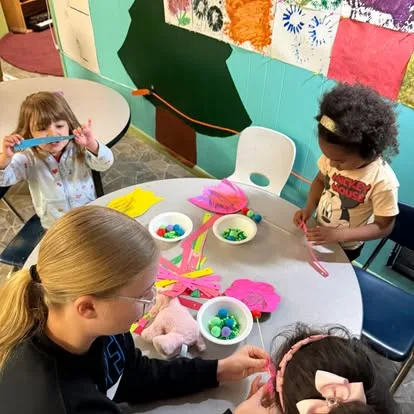
Morning
Arrival, play, and connection
Children settle in through open-ended centers while teachers greet them, notice what they need, and help the group find a calm rhythm.
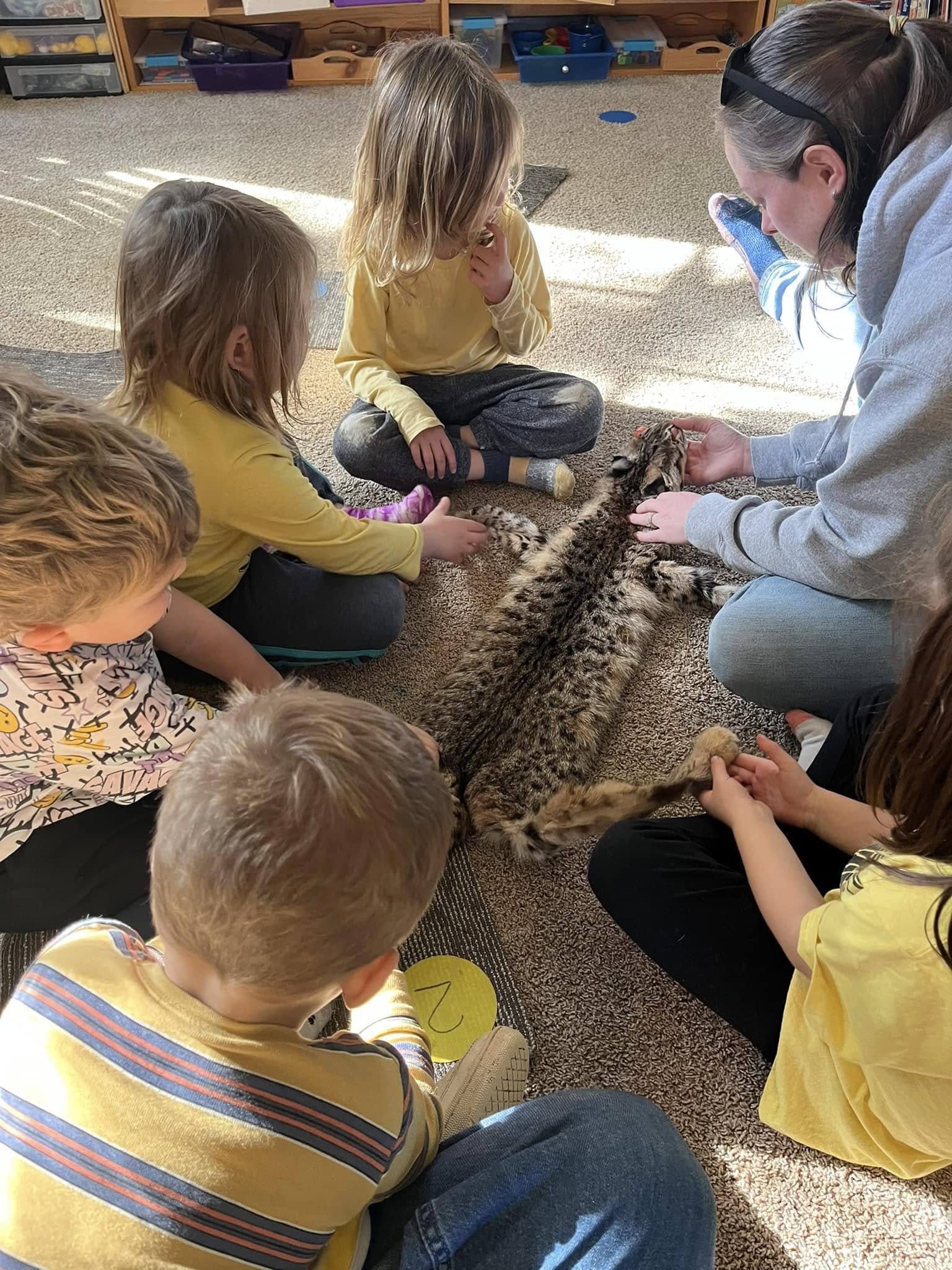
Ages 3–5
Young children learn through play, movement, stories, and relationships in a small, calm school where they are known by name from day one.
A real day
The sequence stays familiar so children know what comes next. These three parts show the shape of the day without pretending every day follows a minute-by-minute script.
Morning
Children settle in through open-ended centers while teachers greet them, notice what they need, and help the group find a calm rhythm.
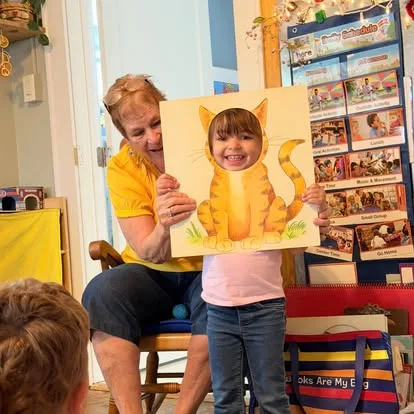
Midday
Read-alouds, songs, counting, art, and simple investigations build language and number sense through things children can touch and talk about.
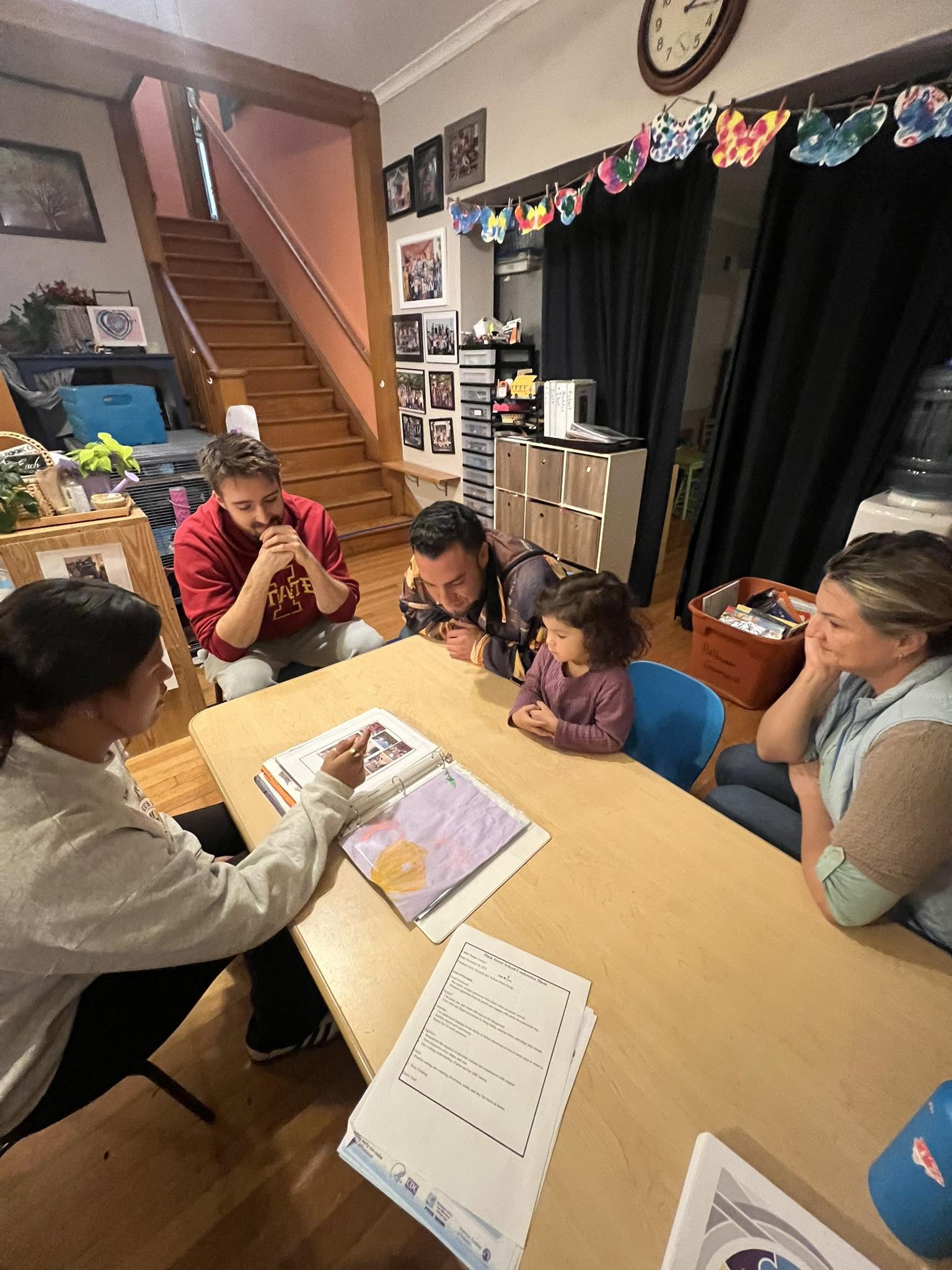
Afternoon
Children share what they made, move outdoors, gather for quiet moments, and help clean up as they practice communication and independence.
The academics
The method is the proof. Families should be able to see how the work actually happens, not just hear that it is personal.
Stories, songs, lunch conversations, and retelling the day build vocabulary and confidence.
How it works
Readiness
A child may be ready for elaborate stories before they are ready to write letters. Another may need movement before group time works. The pace adjusts to the child.
Teachers add language, early math, and more complex choices inside familiar play without rushing the rest of the group.
The routine stays predictable, the next step gets smaller, and teachers help the child rejoin when they are ready.
Teachers notice changes in effort, confidence, and understanding, then talk directly with families about what they are seeing and what comes next.
Meet the teachers
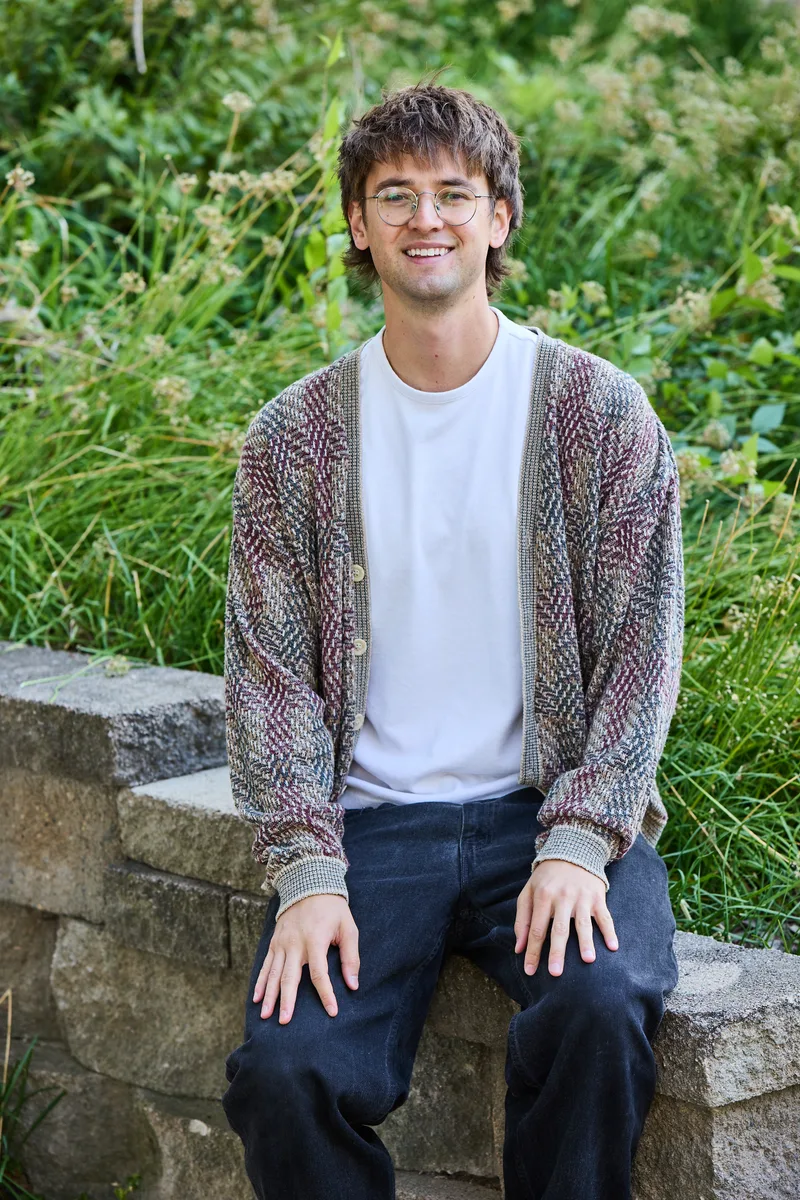
Primary Assistant
I graduated from Iowa State University with degrees in Global Resource Systems and World Language and Cultures Spanish and a minor in Sustainable Development during Covid. With my plans for working internationally put on hold, I started at Main Street and found a true passion for working with young humans. My other passions include travelling and being in nature.
Read full bio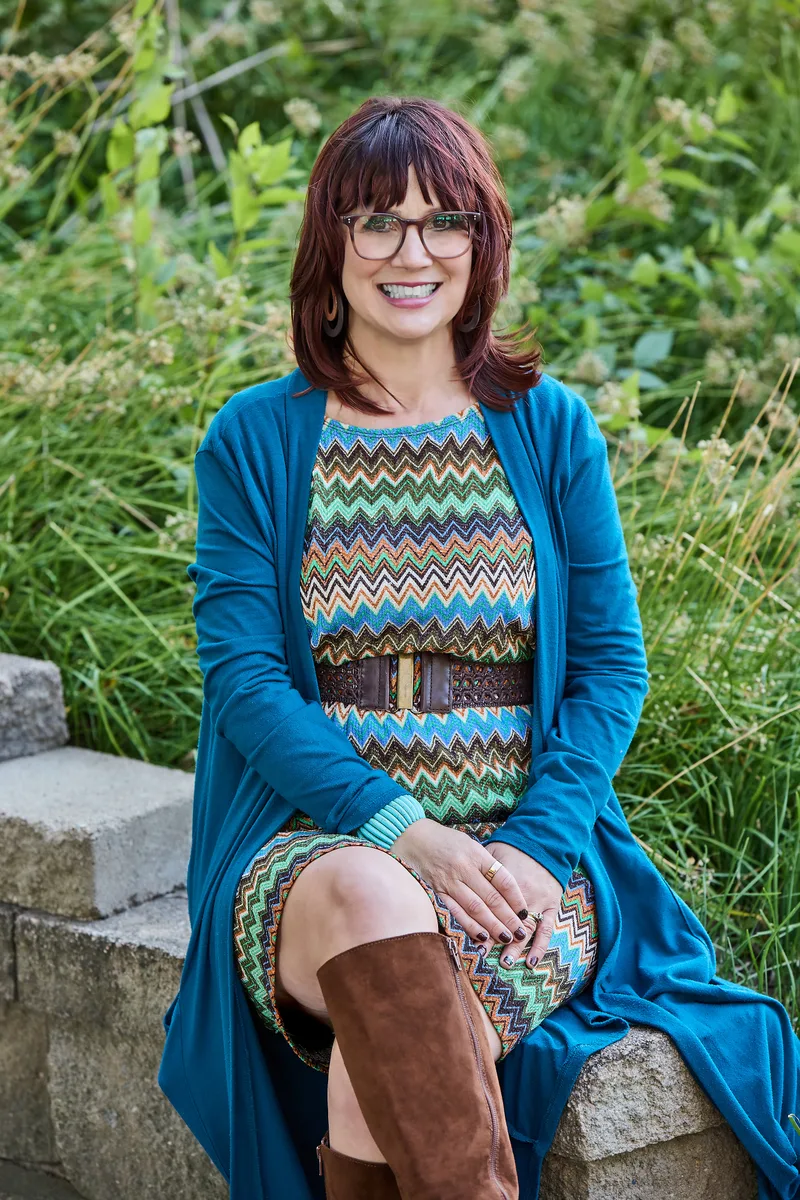
Early Childhood Teacher
My name is Mrs. Kelly Donnelly (Ms. Kelly), and I have the honor of teaching early childhood at Main Street School. I am originally a Pittsburgh, Pennsylvania, native, and have a great passion for teaching and learning. I currently hold a Bachelor of Science Degree in Early Childhood Education from Indiana University of Pennsylvania (English and History Minor) and recently attained my Master's Degree in Effective Teaching (Endorsement in Gifted and Talented K-12) from Drake University. I have had the opportunity to teach in a variety of amazing places over the past 30 years as an educator in Pennsylvania, Texas, Florida, Iowa & Dublin, Ireland. Over the last 18 years, I have called Iowa home and have been very active in early childhood advocacy and education. I also enjoy spending time with my beautiful family, traveling, meeting new people, and learning about other cultures. My husband, Jason Donnelly, is a commercial photographer, and we have been blessed with four children and our fur baby Teddy.
Read full bioQuestions families ask
A closer look at the daily rhythm, the support a child may need, and preschool tuition.
Tell us what your child manages independently and where they still need help. During a visit, teachers can explain the current routines and talk honestly about what support the program can provide before your family decides.
Children settle in through play and connection, then move through stories, songs, counting, art, simple investigations, outdoor movement, and time to share and clean up. The activities change, but the sequence stays familiar.
No. Iowa Students First ESAs are for K–12 students, so they do not apply to preschool. Contact the school office for current early childhood tuition and fees.
The best way to know whether Main Street School is right for your child is to visit, meet the teachers, and ask directly.